

Kanban Principles vs Practices, Shown on One Board
Kanban has three change principles, three service principles and six practices. See what each means and how they show up on a real board you can build today.
8 min read
Read article
Kanban has three change principles, three service principles and six practices. See what each means and how they show up on a real board you can build today.
A Wrike alternative for teams that use it as a task board: what Wrike costs per user, what you give up, and when a plain kanban board is enough.
What an AI task manager does, what it costs per seat, and when a plain kanban board that your own AI assistant can read is the better fit. Verified prices.

A Linear alternative for teams that use it as a task board: the 250 issue limit on the free plan, the cost per user, and when a plain kanban board is enough.

How Cal Newport's time blocking works and how to feed it from a kanban board: the evening routine, reactive blocks and what to do when the plan breaks.
A Smartsheet alternative for teams that only use the board view: what it costs per member, what you give up, and when a flat-price kanban board is enough.

Task prioritization means ranking work by what it costs and what it returns. Six methods compared on one task list, where each fails, and a kanban setup.
Airtable alternative for teams that only use the kanban view: what Airtable costs per editor, where its free plan stops, and when a flat-price board is enough.

The Ivy Lee method means writing six ranked tasks the evening before and finishing them in order. How it works, where it breaks, and a board setup for it.
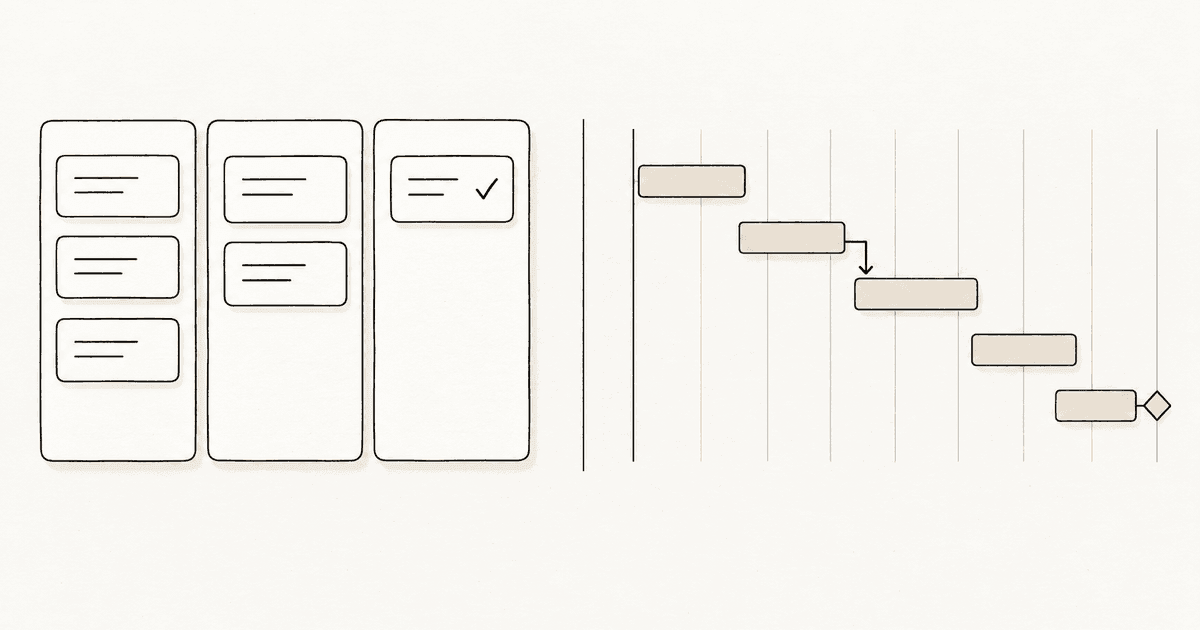
Kanban vs Gantt explained plainly: one shows the flow of work, the other the schedule. See when each fits, where each breaks, and how to combine them.
OneNote has no kanban board view. Build one with a table, several tables or sections and pages, see which holds up in daily use, and when to switch tools.
A kanban pull system starts work only when a slot opens, not on a schedule. See pull vs push on a real board, how WIP limits create the pull, and an example.
The best open source Jira alternatives compared: OpenProject, Redmine, Taiga, Plane and Kaneo. Licenses, what self-hosting costs, and the free hosted route.

See archived items in Trello: board menu, More, Archived items. How to restore cards and lists, how to close a board, and when delete is permanent.

A weekly review in fifteen minutes, run on a kanban board: clear the inbox, check last week, and pick what goes in next. Steps, timings and a first-time setup.

Lead time vs cycle time on a kanban board: lead time starts when a card is requested, cycle time when work begins. Definitions, a worked example, what to track.
An async standup works best when the board does the reporting. Set up columns, a blocked tag and a five-minute morning scan that replaces the daily call.
Most guides to ChatGPT for project management mean copy and paste. This one connects ChatGPT to a live kanban board it can actually read and update.
Kanban vs agile explained plainly. Agile is a set of values, kanban is one way to practice them. See how they differ, when to add sprints, and a board to start.
A free Google Sheets kanban template that counts WIP limits, shows one stage with FILTER, and moves a task forward with one Apps Script click.
Kanban swimlanes split a board into horizontal rows, one per person, client or priority. Here are the four common types and when a tag does the job instead.
Seven kanban board examples with their exact columns, from a three column personal board to a sprint board, plus a rule for when a column has to go.
ClickUp alternative roundups compare ten tools on features. This one shows what ClickUp costs per seat as a team grows, and where a flat-price board fits.

A daily focus board with one rule: only one card in Doing at a time. Plus a goal board that turns intentions into next actions. Free, no signup.
A research project management system on a kanban board: literature review, data collection, revisions, and how long a small project realistically takes.
Turn the Eisenhower Matrix into four kanban columns: Do First, Schedule, Delegate, Delete. No separate Eisenhower Matrix software or label filters needed.
An AI chief of staff needs one shared task board, not five disconnected apps. How to build one with Claude and MCP, without buying hardware.
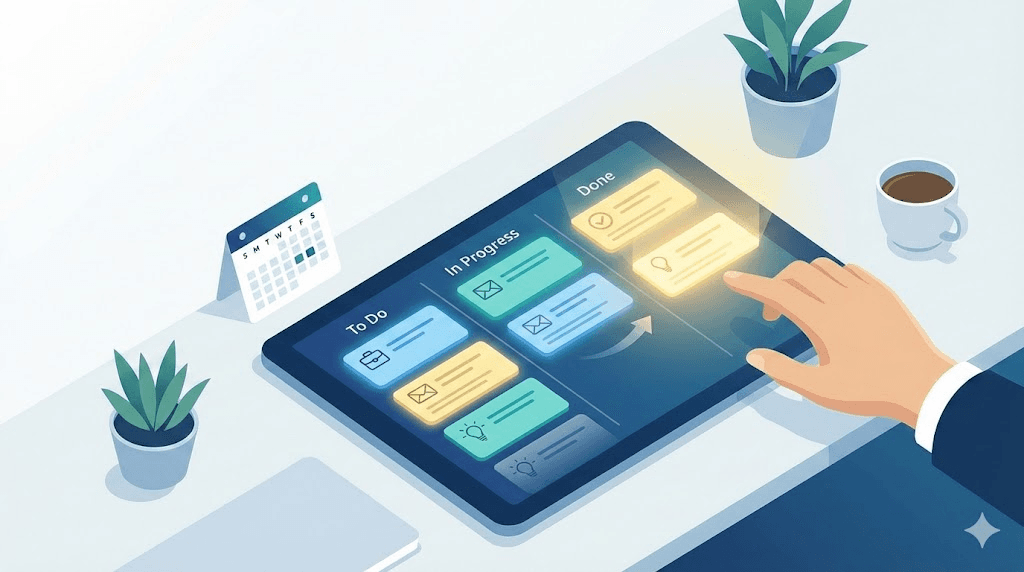
Five weekly kanban board layouts, what each one is good at, and how to run the fifteen-minute reset that keeps a personal board alive past week two.
Scrumban keeps Scrum's backlog and drops the sprint. Here is the planning trigger, bucket planning and a real board layout for a small team.

Claude Code for non-developers isn't just email triage and dashboards. Connect it to your kanban board and it can read, sort, and update your tasks.

Kanban metrics explained in plain terms: WIP, cycle time, throughput, and work item age, plus the order to track them in and what to skip until you need it.

A four-column kanban setup for teams of two to ten: one shared board, a WIP limit, a five-minute stand-up, and what to leave out on purpose.
AI prompts for project management that stop you from retyping your project into every chat. Which prompts read your board, which change it, which to skip.

A job application tracker and a sales pipeline, both as kanban boards, built around one idea: separate what you're waiting on from what needs your next move.
A kanban board template in Excel, built rather than downloaded. The exact column layout, the COUNTIF that enforces a WIP limit, and when to stop.
Learn what WIP limits are, how to set them in Kanban, and what to do when a column is full, with practical examples for teams and solo makers.
Kanban vs Scrum explained with a practical decision guide. Compare flow, sprints, roles, WIP limits, and choose a workflow that fits your team's work.

How to pick a project management tool for startups: what a small team needs, what per-seat plans cost, and the signals that you have outgrown a board.

Learn how AI task management works with a kanban board. Use Claude to review cards, triage backlogs, and suggest updates without losing control.
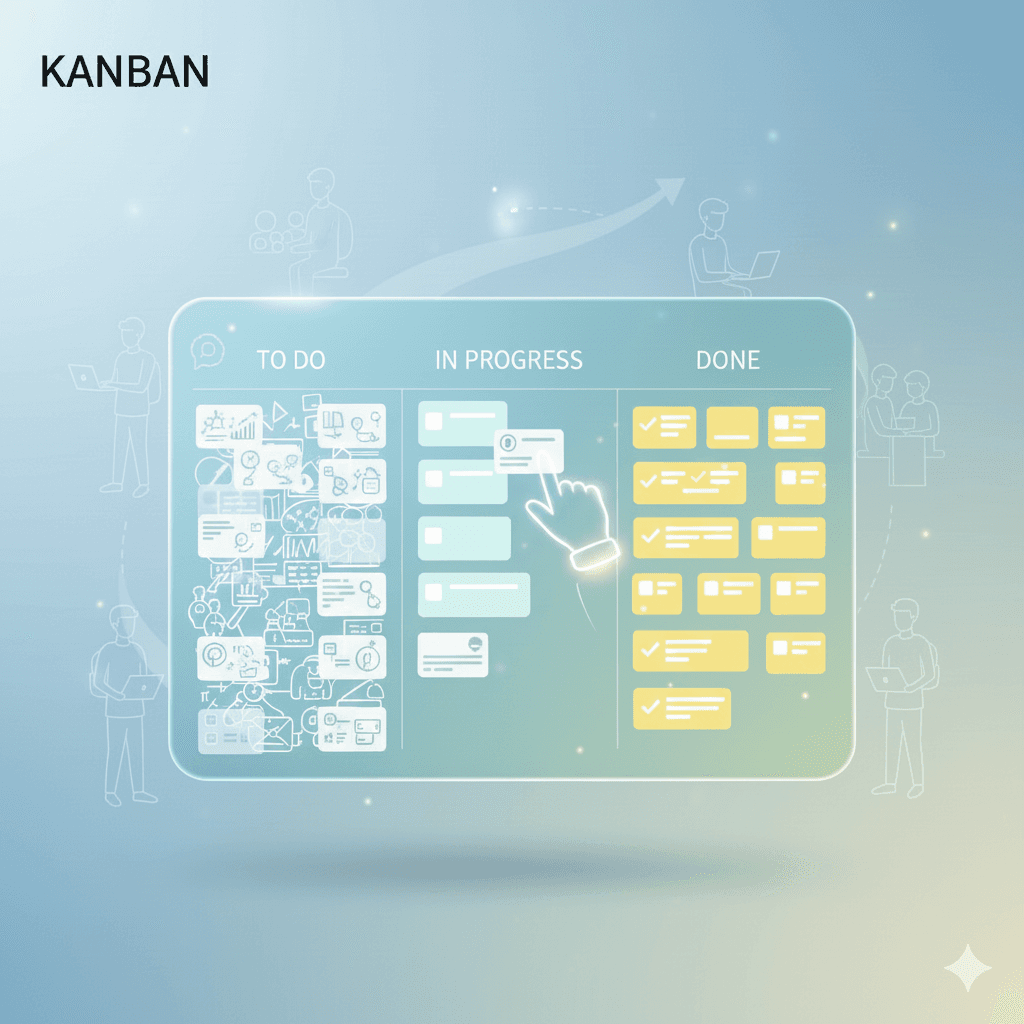
What Kanban is, how the board works, and how to set up your first three-column board in five minutes. A plain guide with no methodology overhead.
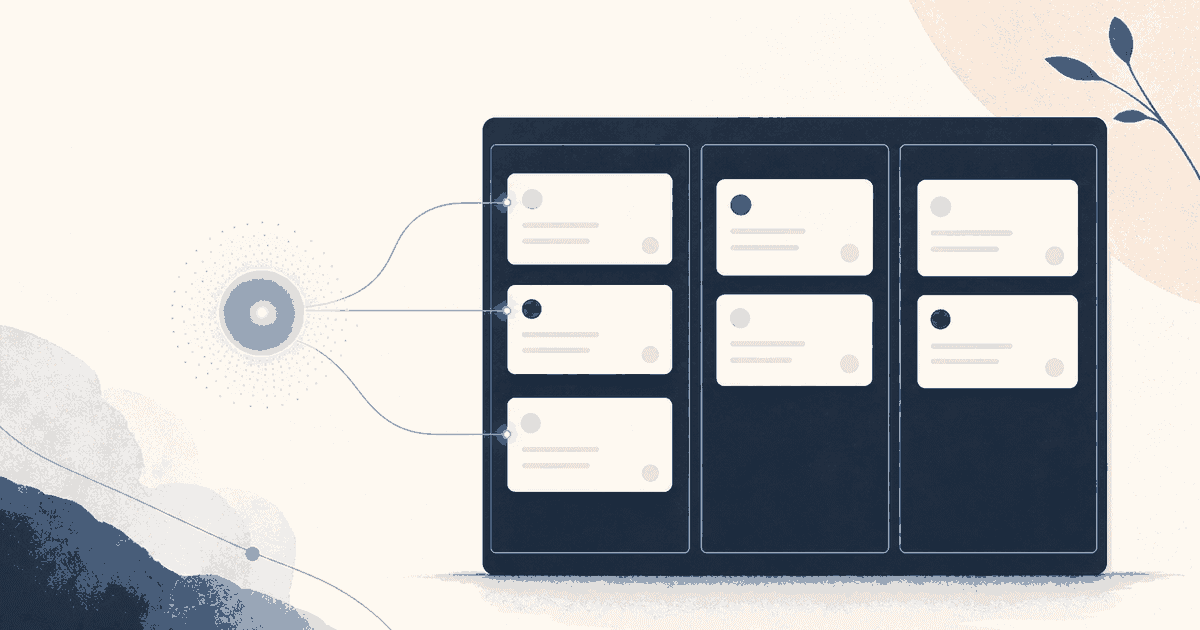
Connect Claude to your kanban board with MCP. This practical guide shows how to set up AI task tracking, review cards, and manage work safely step by step.
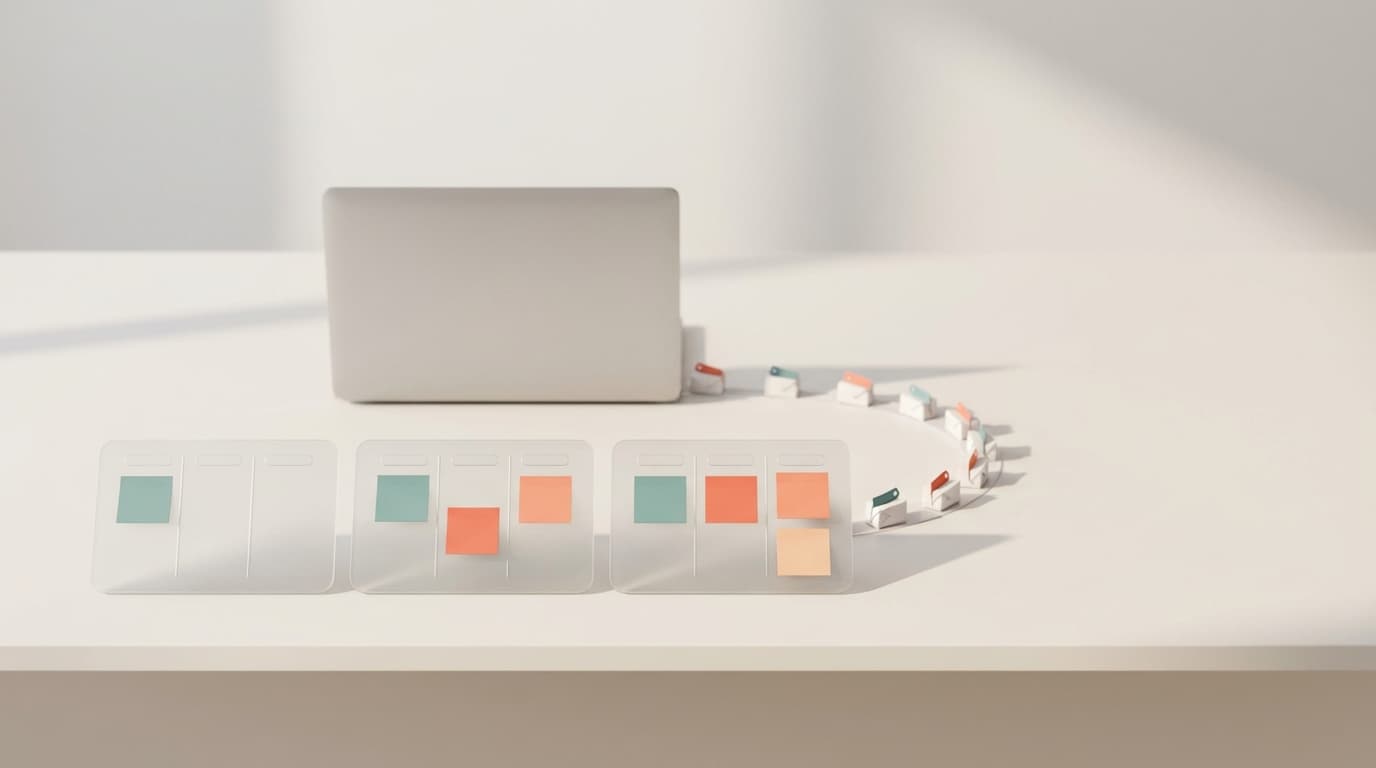
Three board templates small dev teams can run without Jira: a sprint flow, a bug triage board, and a release checklist. Includes WIP limits that actually hold.

A Now/Next/Later product roadmap, a three-column editorial calendar, and a board map that keeps both from turning into clutter.

A three-column meeting board that turns agenda topics into owned tasks in real time, plus an inbox habit for capturing work the moment it appears.
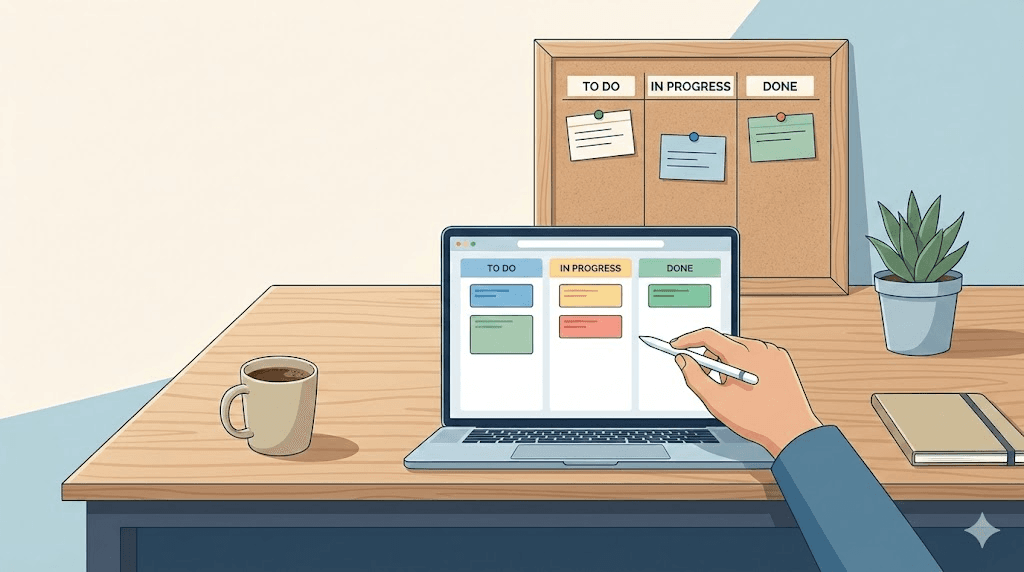
A minimalist project management system for client work: one board per client, three columns, five minutes of setup. Less admin, more billable hours.